New McKinsey Study Shows More than 50% of Consumers Globally Now Use AI for Shopping
In June 2026, McKinsey surveyed approximately 21,000 consumers across 11 markets and found:
-
US AI users who completed purchases with AI rose from 10% to 17%, up 7 percentage points.
-
Globally, 14% of AI users reported completing a purchase using an AI tool.
-
Apparel was among the leading purchase categories.
-
Between 21% and 30% of AI users in the top six purchase categories said they would allow AI to complete a purchase.
-
AI search is 3.2x more influential than traditional search for AI users.
Where AI Wins in Shopping
More than 50% of global consumers now use AI for shopping. However, younger generations are more skeptical of AI. Gen Z uses AI for shopping more (62% vs a 53% average) but trusts it less (67% vs 73%).
The top six categories where AI use among shoppers is most prominent include:
-
Apparel, footwear, and accessories
-
Groceries
-
Restaurants or food delivery
-
Travel and hospitality
-
Beauty or personal care
-
Consumer electronics
In the above categories, up to 30% of users said they would let AI buy something on their behalf. Shopify has made preparing for changes in how we shop easier than ever by giving users native WebMCP capabilities and opening checkout to browser-based agents (like OpenAI’s dot).
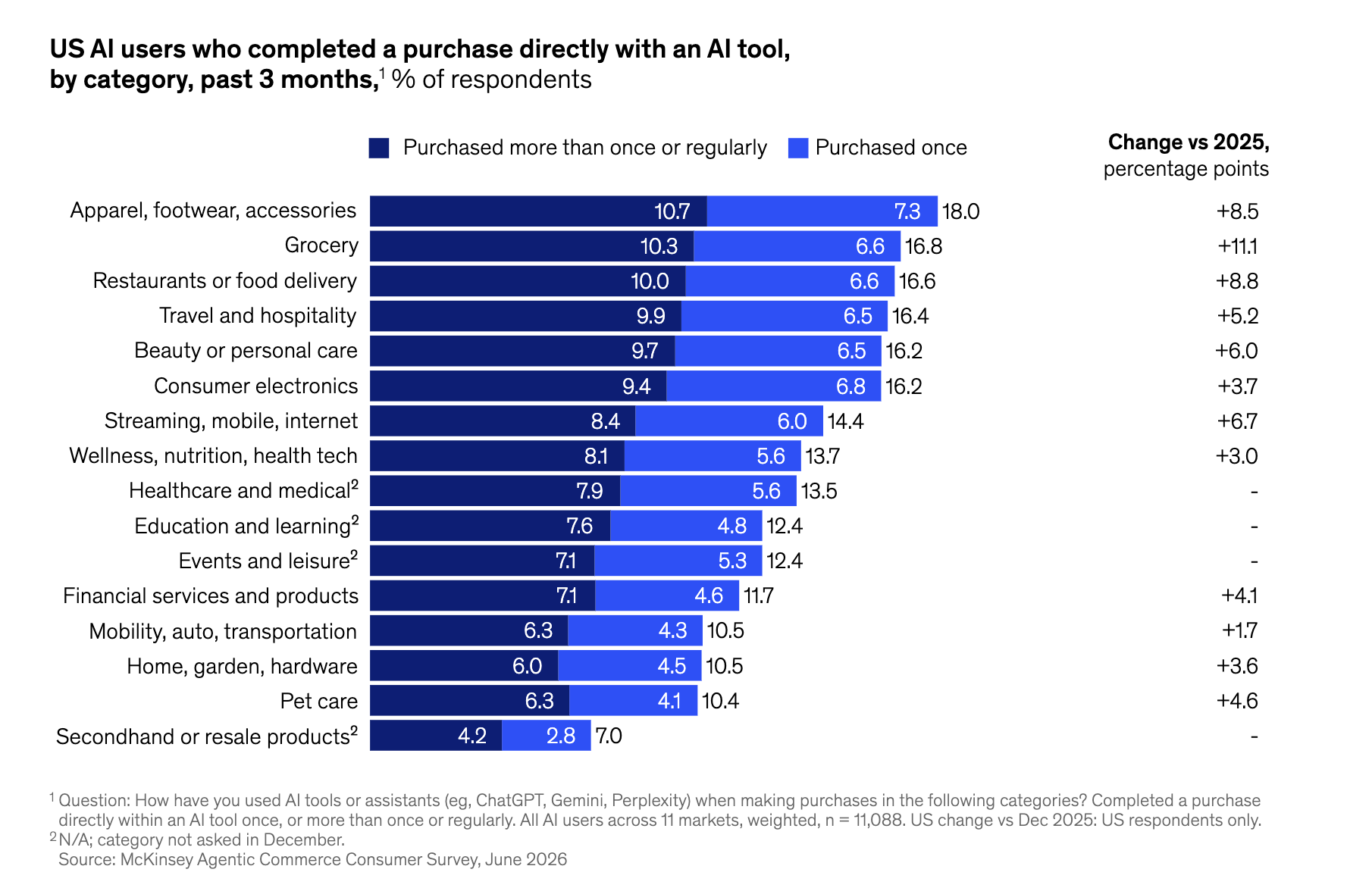
A graph from the McKinsey study illustrating US AI users who completed a purchase directly with an AI tool, by category, past 3 months (% of respondents).
Is the Data Indicative That Agentic Commerce Is Becoming Mainstream?
No. McKinsey stated, “consumers generally use AI tools less the more they progress through the phases of the shopping journey (except when they get help on making a decision).”
This means more people consult AI to help make purchase decisions when discovering and comparing products, not when completing checkout events.
Remember, this data is from June, and a lot has changed since then. Autonomous agents, like Muse and Grok Bot, are gaining traction.
Meta Muse Adoption
In its 2026 third-quarter earnings call, Meta reported that Muse, its autonomous AI agents, had over 10 million active users, with shopping being a top activity.
It forecasts that Meta will eventually bring in more revenue than its family of apps do today. On the call, Mark Zuckerberg shared that a quarter of engaged Muse users who shopped through it had an average purchase over $200.
Meta also says it plans to have infrastructure in place for over 1 billion users soon, so Muse may be rolled out globally soon.
Grok Bot Adoption
Grok Bot has far fewer users than Muse, at only 400,000 reported in mid-September. However, unlike Muse, Grok Bot is positioned primarily for enterprises. So, it makes sense to optimize for Grok Bot if your ICP is B2B.
OpenLens: Control What AI Says About You
OpenLens enables brands to control and measure what AI says about them. Use the site readiness check to view whether your website is agent and AI-crawler-ready against a list of best practices developed from leading standards.
With the content audit, you can see how you can make your website content more machine-readable and easier to extract. Also, our in-app agent, Iris, allows you to connect all your data and generate drafts that follow best practices.
Sign up today and track your first brands for free with research-grade software.